For Julia Compton, choosing an education in the healing arts was about more than learning new modalities—it was about answering a deeper calling.
After more than a decade working in the cannabis industry, Julia had already spent years helping people explore wellness, education, and alternative approaches to healing. Yet her own journey was leading her somewhere deeper: toward understanding the nervous system, trauma, embodiment, self-discovery, and the many ways people can reconnect with themselves.
That calling ultimately brought Julia from Michigan to Arizona, specifically to study at the Southwest Institute of Healing Arts (SWIHA).
Today, as she completes her Integrative Healing Arts Practitioner studies, Julia has expanded her education through certifications in Shamanic Reiki, Somatic Psychology and the Neuroscience of Regulation and Trauma, Life Coaching, Psychology of Addiction, Heart-Centered Leadership, Intuitive Guidance, and Yoga Teacher Training.
Together, these experiences have helped her develop a holistic, trauma-informed approach to healing that considers the mind, body, spirit, and community.
A Calling to Go Deeper
Before SWIHA, Julia was already passionate about helping others navigate wellness and healing. Her years in the cannabis industry gave her an opportunity to support people through alternative approaches; however, she began to feel called to understand healing beyond symptom management.
“I wanted to better understand how people can reconnect with themselves, regulate their nervous systems, and cultivate meaningful change from within,” Julia shares.
Her own healing journey became an important part of that calling.
Rather than simply looking outward for answers, Julia began exploring what happens when people develop a deeper relationship with themselves—when they learn to listen to their bodies, understand their nervous systems, work through conditioning and wounds, and cultivate self-trust.
That exploration led her to SWIHA.
And the experience became much more than an education.
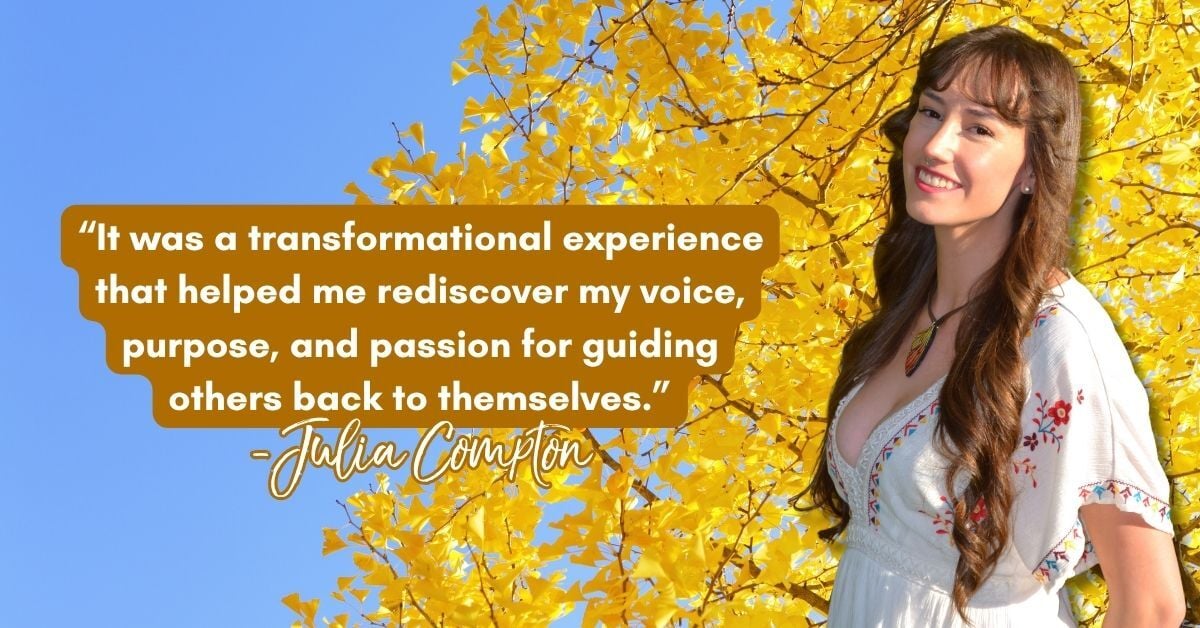
“It was a transformational experience that helped me rediscover my voice, purpose, and passion for guiding others back to themselves,” she says.
Discovering the Power of Holding Space
One of Julia’s defining moments came when she facilitated her first workshop.
As she watched participants reconnect with parts of themselves they had forgotten, something clicked.
She witnessed people soften, express themselves authentically, and remember their own inner wisdom. For Julia, the experience was a powerful reminder of why healing work matters—and how her own healing journey had prepared her to create spaces for others.
“I realized healing isn’t about fixing, rescuing, or saving people,” she explains. “It’s about creating spaces where they can remember who they already are and always have been.”
That philosophy has become central to Julia’s work.
Rather than positioning herself as someone who has all the answers, she sees her role as creating supportive, compassionate environments where individuals can explore their own self-awareness, inner wisdom, and capacity for change.
An Education Rooted in Integration
Julia’s time at SWIHA has been intentionally expansive.
Through the Integrative Healing Arts Practitioner program and additional certifications, she has explored a variety of approaches to personal growth and healing, including somatic psychology, nervous system regulation, Reiki, yoga, intuitive guidance, life coaching, addiction psychology, and heart-centered leadership.
For Julia, these modalities aren't isolated areas of study. They are pieces of a larger picture.
One of her greatest lessons at SWIHA has been the importance of embodiment and integration.
“Knowledge becomes transformational when it is practiced, experienced, and integrated into daily life,” she says.
That philosophy reflects the way Julia approaches her own continued growth. Education, for her, isn't simply about collecting certifications or learning new concepts. It's about living what she learns.
From Surviving to Truly Living
Julia describes her experience at SWIHA as a significant turning point in her life.
“SWIHA helped me move from surviving to truly living,” she says.
Through her education and personal work, Julia has developed a deeper sense of self-trust, confidence, and purpose. She has learned to honor her nervous system, establish healthier boundaries, and embrace authenticity in both her personal and professional life.
Most importantly, she has become increasingly aligned with her mission: helping others reconnect with themselves through compassion, creativity, and embodied healing.
That mission is now taking shape through her business, Love Cultivator.
Cultivating Connection Through Love Cultivator
Julia founded Love Cultivator to create heart-centered spaces where people can safely explore self-connection and embodied love.
Her work incorporates many of the tools and perspectives she has developed throughout her education, including:
- - Somatic nervous system coaching
- - Shamanic Reiki
- - Yoga
- - Mindfulness practices
- - Intuitive guidance
- - Workshops
- - Group healing experiences
- - Creativity and self-expression
- - Trauma-informed education
- - Nervous system regulation practices
Through these offerings, Julia hopes to help people develop greater self-awareness, resilience, self-trust, and emotional well-being.
Her approach is rooted in the belief that people aren't broken and don't need to be “fixed.” Instead, they can be supported in reconnecting with the parts of themselves that may have become hidden beneath conditioning, wounds, expectations, or life experiences.
“I hope to remind people that they are not broken,” Julia says. “They are worthy of love, belonging, and connection exactly as they are.”
Learning From the SWIHA Community
Throughout her time at SWIHA, Julia has been fortunate to learn from instructors who challenged, encouraged, and supported her growth.
She especially recognizes Leah Lackland, Dekim Yay, Brad Boute, Debbie Chamberlain, and James Patrick for the impact they had on her educational journey.
Among her favorite classes were Shamanic Reiki, Shamanic Pathways, Somatic Psychology and The Neuroscience of Regulation and Trauma, Yoga Teacher Training, Intuitive Guidance, and courses focused on self-discovery and personal transformation.
Each experience contributed to Julia's growing understanding of both herself and the people she hopes to serve.
A Message for Future SWIHA Students
If Julia could offer one piece of advice to someone considering their own SWIHA journey, it would be simple:
Trust the process.
She encourages future students to arrive with an open mind, a willingness to be transformed, and the courage to participate fully—even when that means stepping outside their comfort zone.
“Don’t just study the material, actually live it,” she advises. “Practice it every day. The more you embody what you’re learning, the more powerful your experience will become.”
For Julia, that embodiment has been at the heart of her transformation.
Healing Can Be Profound—and Playful
As Julia continues preparing for graduation and building Love Cultivator, she is also continuing her own personal growth and embodiment practices.
Her vision for her work extends beyond traditional ideas of what healing “should” look like. She believes that creativity, curiosity, connection, and self-expression can all play meaningful roles in transformation.
And perhaps that is one of the most beautiful lessons from Julia’s journey: healing doesn't necessarily mean becoming someone completely different.
Sometimes, it means remembering.
Remembering your voice.
Remembering your inner wisdom.
Remembering your capacity for connection.
And remembering that you were worthy of love and belonging all along.
Julia's journey at SWIHA is an example of what can happen when education becomes more than information—it becomes an invitation to grow, embody, explore, and discover what is possible when we reconnect with ourselves.
As she continues cultivating her own path and creating spaces for others through Love Cultivator, Julia is carrying forward the heart of her SWIHA experience: healing isn't about becoming someone new. It's about remembering who you've always been.